Skip to content
 Driveway resurfacing is the process of restoring the top layer of your driveway so it looks and performs better without a full replacement, provided the base remains sound. For homeowners looking for help to “resurface a driveway near me”, this solution often makes sense when surfaces show wear, staining, or light cracking, without primary settling or drainage failure.
In Murfreesboro and across Middle Tennessee, resurfacing improves appearance, traction, and everyday usability while extending the life of existing concrete. Homeowners often wonder whether resurfacing, repair, or replacement is the right choice. That decision depends on surface condition, overall stability, and how water moves across the slab.
We regularly work with property owners in Murfreesboro, Smyrna, La Vergne, Mt. Juliet, Nashville, Franklin, Brentwood, Spring Hill, and Shelbyville. For example, we recently resurfaced a cracked driveway in Smyrna where the slab was stable, restoring a clean, even finish.
What Is Driveway Resurfacing (and what it is not)

Driveway resurfacing focuses on the concrete surface layer. It improves the driveway’s appearance and performance while preserving the existing slab.
Key takeaways
- Resurfacing improves appearance, traction, and minor surface defects
- It is not a solution for foundation or base problems, such as ongoing settling or chronic drainage issues
- Results depend heavily on proper preparation, including cleaning, patching, and bonding
Resurfacing your driveway does not fix deep structural cracks or slabs that continue to move. When these conditions exist, repair or replacement is necessary before overlays are applied, clarifying the scope of driveway resurfacing.
Driveway resurfacing vs driveway restoration
Driveway restoration is a broad term that covers cleaning, repairs, sealing, and resurfacing. Resurfacing is one method within that larger category. Restoration may involve simple crack repair and sealing, while resurfacing adds a new wear layer to refresh the entire surface.
Concrete resurfacing driveway vs asphalt resurfacing
Concrete resurfacing uses concrete-based overlays or micro-toppings that bond to existing concrete. Asphalt resurfacing uses asphalt overlay methods. Sealcoating asphalt is not the same as resurfacing; it is a protective coating rather than a new surface layer. This distinction matters when searching for resurfacing services, especially when comparing materials.
Is your driveway a good candidate for resurfacing?
If your driveway is generally stable and the damage is limited to the surface, resurfacing can be a practical solution. This option works best when appearance and minor wear are the primary concerns, rather than underlying structural or drainage issues.
Signs resurfacing can work
A driveway is a good candidate for resurfacing when surface wear is visible, and the slab remains stable, with shallow cracks and no underlying structural or drainage issues.
- A worn or rough surface with visible staining
- Hairline cracks or shallow spider cracking
- Light scaling or flaking on the top layer
- A desire to improve appearance before selling or upgrading curb appeal
These conditions are common in Tennessee homes where weather and moisture affect exposed concrete over time.
Red flags that suggest repair-first or replacement
Resurfacing may not last when damage is caused by slab movement, poor drainage, or unstable soil, as these underlying issues often require repair or full replacement to prevent repeat problems.
- Deep cracks that return in the exact locations
- Noticeable sinking or uneven slabs that cause pooling water
- Drainage problems that repeatedly undermine the surface
- Edges breaking away due to base movement or soil issues
Concrete driveway repair and sealing
Repair and sealing focus on stabilising existing concrete before considering resurfacing. This approach targets specific problem areas, helping extend driveway life and prevent minor issues from developing into larger surface failures.
Repair-first approach
Repairs address specific problems before any resurfacing work begins. Crack repair uses the right materials to prevent water intrusion. Spalled areas are patched to restore strength, and joints are repaired to limit moisture penetration. Sealing then protects the surface from moisture, chemicals, and everyday wear, especially near garages and entry points.
When sealing is enough
If cracks are minor and stable and the surface remains solid, sealing alone may be sufficient. In these cases, resurfacing can be unnecessary. Proper sealing can extend the life of the driveway while maintaining a clean appearance.
Concrete resurfacing options in Murfreesboro

Concrete resurfacing driveway offers multiple system options based on surface condition, durability requirements, and appearance goals. This helps homeowners understand what is driveway resurfacing is and how the right approach supports long-term performance.
Common resurfacing systems
Micro-toppings provide a thin refresh for lightly worn surfaces. Overlay systems add more build for worn textures and small defects, creating a more uniform look. Decorative overlays allow for stamped or stained finishes when appearance is a priority. Textured finishes improve grip on sloped or shaded driveways where moisture is common.
Decorative concrete for curb appeal
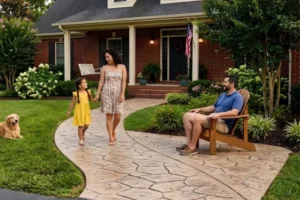
Stained finishes offer subtle color variation, while stamped finishes mimic stone or brick patterns. Driveways typically benefit from simpler textures that remain durable under traffic. Decorative finishes require routine cleaning and resealing to maintain their appearance.
Driveway resurfacing vs. replacement
If the base is stable, resurfacing often delivers better value. When the base fails, replacement becomes unavoidable.
- Repair when problems are limited, and the slab is stable
- Resurface when damage is widespread, but the structure is sound
- Replace when movement or structural issues persist
Not sure which option is best for your driveway? Send photos for a ballpark estimate, and we will recommend repair, resurfacing, or replacement based on condition.
Costs in Murfreesboro
Resurfacing costs for a driveway are driven more by preparation requirements and site conditions than by surface area alone. Understanding these factors, aside from knowing what is driveway resurfacing is, helps set realistic expectations before requesting estimates.
What affects price
- Driveway access and layout
- Surface preparation needs such as cleaning and patching
- Leveling requirements to address pooling water
- Finish choice, whether standard or decorative
- Drainage corrections, which are common after heavy rain
- Scheduling constraints for quick turnarounds
For example, a Franklin driveway required drainage correction before resurfacing to ensure lasting results.
Timeline and curing in Middle Tennessee
Timing plays a major role in resurfacing success. Weather conditions and curing practices directly affect bonding, durability, and the time required for the driveway to be safely used.
What to expect
The process includes inspection, preparation, application, and curing. Following the contractor’s curing guidance is critical to long-term performance.
Best time to resurface
The perfect time to resurface your driveway is around heavy rain and temperature swings. Avoid prolonged wet conditions and sudden cold snaps, which can affect bonding and curing.
Related content: How Thick Should a Concrete Driveway Be? Expert Guide
Preventing concrete problems locally
Preventive care reduces future driveway issues by managing moisture, movement, and surface exposure, which is essential for protecting a concrete resurfacing driveway and maintaining its long-term performance.
Common local causes
Concrete in Murfreesboro and nearby towns is affected by clay-rich soils that shift with moisture, heavy rainfall that creates runoff issues, freeze–thaw cycles that trap moisture, chemical exposure, and summer heat that impacts curing and surface protection.
- Clay-rich soils and settlement
- Heavy rain and poor runoff paths
- Freeze–thaw swings and moisture intrusion
- Salt or chemical exposure at driveways and entrances
- Summer heat affecting curing and surface protection
Prevention checklist
Preventive care focuses on managing water, protecting the surface, and allowing controlled movement. Simple maintenance steps can reduce cracking, limit moisture intrusion, and help concrete better withstand local weather conditions.
- Keep water moving away with proper grading and drainage
- Seal concrete at appropriate intervals
- Fill small cracks early
- Avoid harsh chemicals where possible
- Use proper joints to control cracking
Individual driveway considerations and needs
Different driveway concerns call for different solutions. The following sections break down resurfacing, repair, and replacement considerations based on homeowner priorities, safety needs, and commercial project requirements.
For the curb-appeal homeowner
Resurfacing combined with staining or stamped accents refreshes driveways and walkways. Results are strong when the slab is stable. Replacement is still required if movement exists. Before selling, focus on even surfaces, clean finishes, and safe transitions.
For the safety-first decision-maker
Trip hazards and uneven slabs should be addressed with leveling or grinding before resurfacing. A repair-first approach avoids failed overlays and supports long-term safety through regular maintenance.
For commercial and facilities buyers
Planning work around operating hours matters. Providing photos, measurements, and site details speeds up quotes. Quality control includes surface prep, cure guidance, and durable finishes. We have completed flatwork projects across the Nashville area with these priorities in mind.
FAQ
1. How long does concrete take to cure?
Concrete curing time varies depending on weather conditions, product type, and thickness. Contractors typically provide specific guidelines to ensure proper strength and long-term performance.
2. How long does driveway resurfacing last?
The lifespan of a resurfaced driveway depends on surface preparation, environmental conditions, and ongoing maintenance. When done properly, resurfacing can last many years before needing additional repairs.
3. Concrete resurfacing driveway vs. replacement: what’s the difference?
Concrete resurfacing is ideal when the existing slab is structurally sound but worn or stained. Replacement is necessary when there is major cracking, sinking, or underlying structural failure.
4. How much does a concrete driveway cost in Murfreesboro?
Concrete driveway costs vary based on size, preparation requirements, and site conditions. A professional site evaluation is the best way to receive accurate pricing for your property.
5. Why is my concrete cracking?
Concrete cracking often occurs due to moisture infiltration, soil movement, or temperature fluctuations. Improper installation or lack of control joints can also contribute to cracking over time.
6. Concrete driveway repair and sealing: when is it enough?
Repair and sealing may be sufficient when cracks are small, stable, and not spreading. These methods help protect the surface and extend the driveway’s usable life when structural integrity remains intact.
7. How long does concrete take to cure?
Concrete curing time varies depending on weather conditions, product type, and thickness. Contractors typically provide specific guidelines to ensure proper strength and long-term performance.
8. Driveway concrete resurfacing near me: how do you choose a contractor?
Look for contractors who explain their preparation process clearly and offer realistic timelines. Detailed, transparent quotes and local experience are also important factors to consider.
9. Driveway resurfacing companies near me: what should be included in a quote?
A complete quote should outline surface preparation, materials used, finishing options, and curing instructions. Clear expectations help avoid surprises and ensure quality results.
10. Driveway asphalt resurfacing near me: is it the same as sealcoating?
No, sealcoating is a protective treatment applied to asphalt surfaces. Resurfacing involves adding a new layer to restore structure and extend the driveway’s lifespan.
11. Can you resurface a driveway with drainage problems?
Drainage issues must be addressed before any resurfacing work begins. Ignoring water problems can cause premature failure of the new surface.
12. When do you need driveway concrete replacement?
Concrete replacement is necessary when there is significant structural movement or failure in the base material. Severe cracking, sinking, or uneven slabs usually indicate resurfacing is no longer a viable option.
Get Expert Help From Bucket City Concrete Today
Get a free quote from Bucket City Concrete Contractors. If you are in Murfreesboro, Smyrna, La Vergne, Mt. Juliet, Nashville, Franklin, Brentwood, Spring Hill, or Shelbyville, request a site visit or send photos for a ballpark estimate for repair, resurfacing, or replacement.